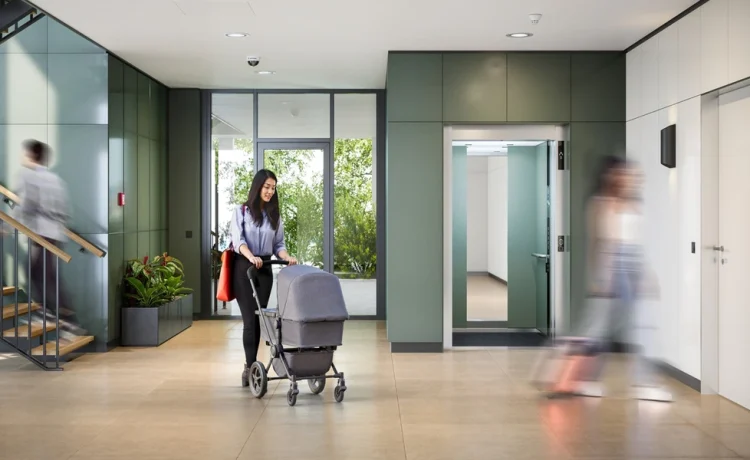
The demand for lift Singapore installations has grown steadily across both residential and commercial sectors as Singapore’s population ages and as developers and homeowners invest in making properties more accessible and functional. Whether the requirement is a compact home lift for a multi-storey landed property, a platform lift for a shophouse, or a full passenger lift system for a commercial building, the core considerations of safety, space, and long-term reliability remain the same.
Why Lift Demand Is Growing in Singapore
Several converging trends are driving the increase in lift installations across Singapore. The ageing population means a larger proportion of residents are managing mobility challenges that make stair climbing difficult or impractical. Multigenerational households, where elderly parents live with working-age children, often require modifications to existing homes to accommodate everyone comfortably.
At the same time, Singapore’s commitment to inclusive design has raised awareness of the importance of accessibility in both private and public spaces. The BCA’s Accessibility Code sets standards for new developments, and many older buildings are being retrofitted to meet those standards or to comply with updated requirements.
As Minister of Social and Family Development Masagos Zulkifli has noted, “An inclusive society is built one home, one building, one neighbourhood at a time.” Lift access is a fundamental component of that vision, enabling people with limited mobility to live and work in spaces that would otherwise exclude them.
Types of Lift Available in Singapore
A full-service lift Singapore provider will offer a range of products suited to different building types and user needs.
- Home lifts: Designed specifically for residential use, these compact enclosed units are suitable for two to four-storey landed homes. They are quieter than commercial lifts, require less structural work, and are designed to blend with domestic interiors rather than stand out as an industrial installation.
- Wheelchair and platform lifts: Open or enclosed platforms that carry a wheelchair and user vertically between floor levels. These are commonly installed in homes where a family member uses a wheelchair, and in commercial premises that need to meet accessibility requirements without the footprint of a full passenger lift.
- Dumbwaiters: Small service lifts used to move items such as food, documents, or laundry between floors without the need for a full-sized passenger lift. Popular in restaurants, offices, and multi-storey homes.
- Passenger lifts: Larger enclosed lifts for commercial buildings, mixed-use developments, and higher-rise residential blocks. These are governed by more extensive regulatory requirements and require a licensed contractor for installation and maintenance.
Planning a Lift Installation
The process of installing a lift in an existing building involves more coordination than many property owners initially expect. A reputable lift installation specialist in Singapore will guide you through each stage:
- Site assessment – measuring the available space, checking structural conditions, and confirming electrical supply capacity
- Product selection – recommending the lift type and specification most suited to the use case and the building
- Permit applications – advising on and assisting with any approvals required from BCA or other authorities
- Installation – coordinating the lift delivery, structural preparation, electrical connection, and fit-out
- Testing and commissioning – verifying safe operation before handover and obtaining the required inspection certificates
The timeline from initial consultation to completed installation varies depending on the product and the complexity of the site, but a realistic planning horizon of eight to sixteen weeks is typical for most residential installations.
Maintenance and Long-Term Safety
All lifts in Singapore must be maintained by a BCA-licensed lift service contractor and subjected to periodic inspection by an Authorised Examiner. These requirements are not merely administrative. They reflect the safety-critical nature of lift systems and the consequences of mechanical failure.
A well-maintained lift will operate reliably for fifteen to twenty-five years or more before major components need replacement. Preventive maintenance contracts, which schedule regular visits by a qualified technician, are the most cost-effective way to achieve this service life. Between scheduled visits, any unusual sounds, vibrations, or operational anomalies should be reported to the maintenance provider promptly rather than monitored and hoped away.
Choosing the Right Provider
The lift market includes a broad range of suppliers, from large international brands to smaller local specialists. Size alone does not determine quality. What matters is the provider’s track record with the specific type of installation you need, the quality of their after-sales service, and their licensing and regulatory standing.
Ask for a site visit before agreeing to any proposal. A company that is willing to assess your specific situation in person, and that returns a detailed and transparent proposal based on that assessment, is demonstrating the kind of professionalism that will carry through into the installation and long-term maintenance of your lift.
Getting Started
The most sensible first step is a consultation with an experienced provider. Bring a clear brief covering the property type, the number of floors to be served, the intended users, and any space constraints. From that starting point, a capable lift Singapore specialist can outline the options, the costs, and the timeline, giving you the information you need to make a well-informed decision.